
House Wiring Plan PDF: A Comprehensive Guide (Updated December 16‚ 2025)
Updated today‚ December 16‚ 2025‚ this guide details house wiring plans‚ covering detached houses‚ townhouses‚ and modern designs. It’s essential for renovations and new builds.
Understanding the Basics of House Wiring
Electrical systems within a home distribute power safely and efficiently. Understanding these fundamentals is crucial before reviewing any house wiring plan PDF. Wiring involves circuits – pathways for electricity – connected to a service panel (breaker box). Homes utilize various wiring methods‚ including Romex‚ conduit‚ and armored cable‚ each suited for different applications and building codes.

Key components include wires (conductors)‚ insulation‚ and grounding systems. Proper grounding is vital for safety‚ preventing shocks and protecting appliances. Load calculations determine the appropriate wire gauge and circuit breaker size to prevent overloads. Different house types – detached‚ townhouse‚ or condo – influence wiring requirements. Modern designs often prioritize integrated lighting‚ demanding careful planning. A solid grasp of these basics empowers homeowners and professionals alike when interpreting and implementing a wiring plan.
Why You Need a House Wiring Plan
A detailed house wiring plan PDF is indispensable for both new construction and renovation projects. It ensures electrical work complies with local codes‚ preventing safety hazards and costly inspections failures. Having a plan clarifies circuit layouts‚ outlet placements‚ and appliance requirements‚ minimizing errors during installation.
For L-shaped or multi-structure homes‚ a plan is even more critical‚ coordinating power distribution across separate buildings connected by decks. It aids in accurate load calculations‚ preventing overloads. Whether wiring a detached house‚ townhouse‚ or modern design‚ a plan streamlines the process‚ saving time and money. It also provides a valuable record for future maintenance and upgrades‚ ensuring long-term electrical system reliability.
Types of House Wiring Systems
Several wiring methods are commonly used in residential construction‚ each detailed within a comprehensive house wiring plan PDF; Romex (NM-B cable) is popular for its ease of installation and cost-effectiveness‚ often used in dry‚ interior locations. Conduit wiring‚ utilizing metal or plastic tubing‚ offers superior protection and is ideal for exposed or damp areas.
Armored cable (MC cable) provides both flexibility and physical protection‚ suitable for garages or unfinished basements. The chosen system impacts the wiring plan’s representation‚ dictating symbol usage and layout considerations. Understanding these differences is crucial for accurate plan interpretation and safe installation‚ especially in varied house types like detached houses or townhouses.
Romex Wiring (NM-B Cable)
Romex‚ or Non-Metallic Sheathed Cable (NM-B)‚ is a widely used residential wiring method detailed in most house wiring plan PDFs. It consists of two or more insulated conductors encased in a plastic jacket. Its affordability and ease of installation make it a common choice for interior wiring in dry locations.
A house wiring plan will clearly indicate Romex runs‚ often using specific symbols for different cable gauges (e.g.‚ 14/2‚ 12/2). Proper securing and protection from physical damage are critical‚ as noted in the plan. It’s unsuitable for wet locations or where exposed to physical abuse‚ requiring alternative methods like conduit.
Conduit Wiring
Conduit wiring‚ depicted in detailed house wiring plan PDFs‚ involves encasing electrical conductors within protective tubing – typically metal (EMT‚ IMC‚ RMC) or plastic (PVC). This method offers superior protection against physical damage and environmental factors‚ making it ideal for exposed wiring‚ wet locations‚ and areas prone to impact.
A comprehensive plan will illustrate conduit runs‚ bends‚ and fitting types. It’s crucial for outdoor applications and where required by local electrical codes. While more labor-intensive than Romex‚ conduit provides enhanced safety and allows for future wire upgrades without re-running the entire system‚ as shown on the wiring plan.
Armored Cable (MC Cable)
Armored Cable (MC Cable)‚ a key component detailed in a house wiring plan PDF‚ features conductors wrapped in a flexible metal sheath‚ offering robust physical protection. It bridges the gap between Romex and conduit‚ providing greater durability than NM-B cable without the installation complexity of conduit systems.
Wiring plans clearly show MC cable routes‚ connector types‚ and grounding requirements. It’s frequently used in unfinished basements‚ garages‚ and commercial applications. MC cable is suitable for exposed work and areas where extra protection is needed. A well-prepared wiring plan ensures proper bonding and grounding for safety and code compliance.

Essential Components of a House Wiring Plan PDF
A comprehensive house wiring plan PDF isn’t just lines on a page; it’s a detailed roadmap for safe and efficient electrical installation; Core elements include a Service Panel Schedule‚ meticulously listing breakers‚ their amperage‚ and connected loads. A detailed Circuit Directory clarifies which outlets and fixtures each breaker controls‚ vital for troubleshooting.
Precise Outlet and Switch Locations are clearly marked‚ alongside wire routing paths. Symbols denote fixture types‚ junction boxes‚ and special components. Accurate load calculations‚ adhering to NEC standards‚ are crucial. These plans ensure compliance‚ facilitate inspections‚ and provide a valuable reference for future modifications or repairs.
Service Panel Schedule
The Service Panel Schedule‚ a cornerstone of any house wiring plan PDF‚ is a detailed inventory of your electrical panel. It lists each circuit breaker‚ its corresponding amperage rating (typically 15A‚ 20A‚ or 30A)‚ and the specific loads it protects. This includes identifying the rooms‚ appliances‚ or dedicated circuits served by each breaker.

A well-maintained schedule is crucial for safety and troubleshooting. It allows for quick identification of tripped breakers and helps prevent overloading circuits. Accurate documentation‚ reflecting any modifications‚ is essential for future reference and electrical inspections. This schedule is a vital component for understanding the electrical capacity of the house.
Circuit Directory
A comprehensive Circuit Directory within a house wiring plan PDF expands upon the Service Panel Schedule‚ providing a user-friendly guide to each circuit’s function. Unlike the schedule’s technical details‚ the directory uses plain language to describe what each breaker powers – for example‚ “Living Room Lights & Outlets” or “Kitchen Refrigerator;”
This directory is invaluable for homeowners and electricians alike‚ simplifying troubleshooting and preventing accidental disconnection of essential circuits. It should detail every outlet‚ switch‚ and fixture connected to each circuit. Maintaining an updated directory‚ reflecting any changes to the wiring‚ ensures continued clarity and safety throughout the home’s electrical system.
Outlet and Switch Locations
The Outlet and Switch Locations section of a house wiring plan PDF visually represents the precise placement of all electrical components throughout the house. This isn’t merely a list; it’s a detailed floor plan overlaid with symbols indicating the type and location of each outlet (standard‚ GFCI‚ USB-C)‚ switch (single-pole‚ three-way)‚ and lighting fixture.
Accuracy is paramount here‚ as it guides installation and future renovations. Dimensions are crucial‚ specifying distances from walls and other fixed points. Clear labeling is essential‚ linking each symbol to the corresponding circuit in the directory. This section ensures proper functionality and adherence to electrical codes‚ promoting a safe and well-designed electrical system.
Creating a House Wiring Plan: DIY vs. Professional
Deciding between a DIY approach and hiring a professional for your house wiring plan PDF is critical. While software and online resources empower homeowners‚ electrical work demands expertise. A DIY plan requires thorough understanding of electrical codes (NEC)‚ load calculations‚ and safety protocols. Mistakes can be dangerous and costly.
Professionals‚ like licensed electricians‚ bring experience‚ ensuring compliance and safety. They handle permits‚ inspections‚ and complex wiring scenarios‚ especially for larger homes or renovations. Though more expensive upfront‚ a professional plan minimizes risks and guarantees a reliable‚ code-compliant electrical system. Consider your skill level and project complexity when making this decision.

Key Electrical Codes and Standards (NEC)
Adhering to the National Electrical Code (NEC) is paramount when creating a house wiring plan PDF. The NEC establishes safety standards for electrical installations‚ minimizing fire hazards and ensuring proper functionality. Updates occur regularly; our guide reflects the December 16‚ 2025 standards.
Key areas covered include wiring methods (Romex‚ conduit‚ MC cable)‚ grounding‚ overcurrent protection‚ and outlet/switch placement. Local amendments to the NEC may also apply‚ requiring consultation with local authorities. A compliant house wiring plan PDF demonstrates a commitment to safety and is essential for inspections and insurance purposes. Ignoring these codes can lead to severe consequences.
Reading a House Wiring Plan PDF: Symbols and Notations
Successfully interpreting a house wiring plan PDF relies on understanding standard electrical symbols. Common notations include representations for outlets‚ switches (single-pole‚ three-way)‚ lighting fixtures‚ and the service panel. Line types indicate different circuit types – often solid for general lighting and dashed for dedicated appliance circuits.
Circuit numbers are crucial for tracing wiring paths. Pay attention to annotations specifying wire gauge (e.g.‚ 14/2 Romex) and breaker sizes. Understanding these symbols and notations is vital for both DIY enthusiasts and professional electricians. A well-documented plan ensures accurate installation and simplifies troubleshooting‚ referencing the December 16‚ 2025 updates.
Wiring for Common Household Appliances
A comprehensive house wiring plan PDF details appliance circuit requirements. Lighting circuits typically utilize 15 or 20-amp breakers‚ while kitchen and laundry appliance circuits often require dedicated 20-amp circuits. High-demand appliances like HVAC systems and electric vehicle charging stations necessitate dedicated circuits‚ often 30 or 50 amps‚ ensuring safe and efficient operation.
Proper load calculations‚ as of December 16‚ 2025‚ are essential to prevent overloading. Modern homes benefit from planning for future appliance additions. Understanding these requirements‚ detailed in the plan‚ is crucial for a functional and safe electrical system‚ especially in L-shaped or multi-structure houses.
Lighting Circuits
A detailed house wiring plan PDF meticulously outlines lighting circuits‚ typically utilizing 15-amp or 20-amp breakers. Modern designs often integrate lighting as a key structural element‚ demanding careful planning. The plan specifies wiring routes‚ fixture locations‚ and switch control schemes throughout the house – whether a detached house‚ townhouse‚ or complex L-shaped structure.
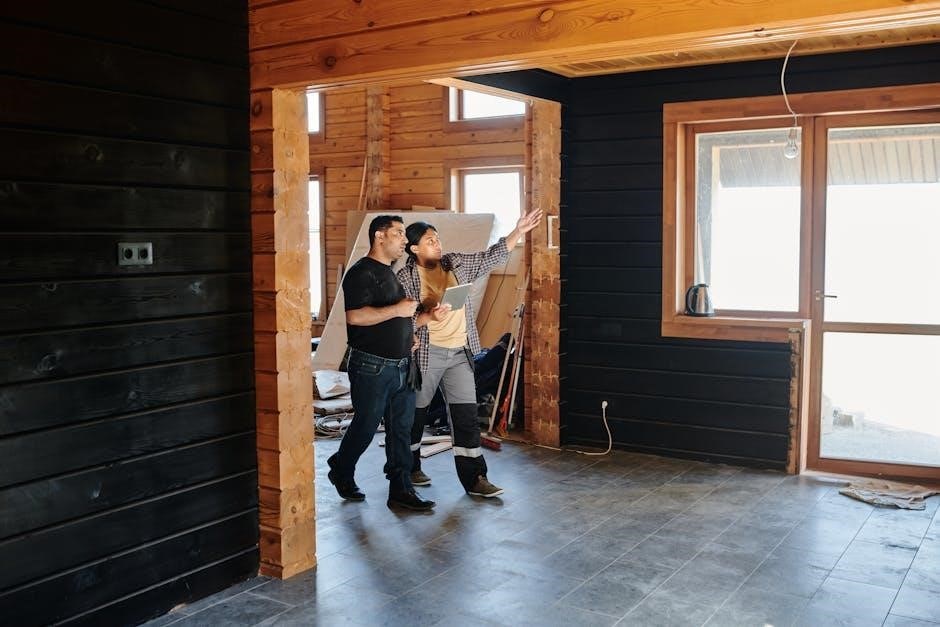
As of December 16‚ 2025‚ LED lighting’s energy efficiency impacts circuit load calculations. The PDF should clearly indicate dedicated circuits for specific areas‚ like living rooms‚ and consider dimmer switch compatibility. Proper planning ensures adequate illumination and adherence to electrical codes.
Appliance Circuits (Kitchen‚ Laundry)
A comprehensive house wiring plan PDF dedicates specific circuits to kitchen and laundry appliances‚ typically utilizing 20-amp breakers. Kitchen circuits must accommodate high-demand devices like refrigerators‚ ovens‚ and dishwashers. Laundry areas require dedicated 120V circuits for washers and dryers‚ with 240V circuits for electric dryers.
As of December 16‚ 2025‚ plans should account for modern appliance energy usage. The PDF details outlet locations‚ circuit assignments‚ and grounding requirements. Proper circuit separation prevents overloading and ensures safe operation within any house type – from detached homes to townhouses.
Dedicated Circuits (HVAC‚ Electric Vehicle Charging)
A detailed house wiring plan PDF‚ updated December 16‚ 2025‚ emphasizes dedicated circuits for high-draw appliances like HVAC systems and electric vehicle (EV) chargers. HVAC systems‚ whether central air or heat pumps‚ require dedicated circuits to prevent tripping breakers and ensure efficient operation.
EV charging demands significant power; a 240V circuit with a 40-60 amp breaker is standard. The PDF outlines proper wiring methods‚ grounding‚ and safety considerations for these circuits. These dedicated lines are crucial for modern homes‚ supporting energy efficiency and future-proofing the electrical system‚ regardless of house type.
Safety Considerations When Working with Electrical Plans
A comprehensive house wiring plan PDF (updated December 16‚ 2025) must prioritize safety. Always disconnect power at the service panel before any work begins; Incorrect wiring can lead to fires or electrocution. Understanding the National Electrical Code (NEC) is paramount; the PDF should reference relevant codes.
Never attempt electrical work beyond your skill level. If unsure‚ consult a qualified electrician. Proper grounding is critical for safety‚ and the plan should clearly indicate grounding locations. Inspect all wiring for damage before installation. Treat every wire as live until verified otherwise – safety first!
Finding and Downloading House Wiring Plan PDFs
Locating a suitable house wiring plan PDF (updated December 16‚ 2025) requires careful searching. Online resources‚ building departments‚ and electrical contractors often provide plans. Be cautious of free‚ generic plans; they may not meet local codes. Specialized websites offer customizable templates‚ sometimes for a fee.
Ensure the PDF is clearly labeled and includes a revision date. Verify the plan’s applicability to your specific house type – detached‚ townhouse‚ or other. Always cross-reference downloaded plans with local regulations. Professional plans‚ tailored to your home‚ are the safest and most reliable option.

Software and Tools for Creating Wiring Diagrams
Several software options facilitate creating detailed house wiring plan PDFs (updated December 16‚ 2025). Popular choices include SmartDraw‚ Lucidchart‚ and Microsoft Visio‚ offering pre-built electrical symbols and drag-and-drop functionality. Specialized electrical design software‚ like AutoCAD Electrical‚ provides advanced features for professional results.
For simpler diagrams‚ free online tools are available‚ though they may lack advanced capabilities. Consider software compatibility with PDF export and ease of use. Accurate diagrams are crucial for safety and code compliance. Remember to save frequently and back up your work!

House Wiring for Different House Types
House wiring plan PDFs (updated December 16‚ 2025) vary based on structure. Detached houses (traditional “house” design) require comprehensive plans due to their size and independent systems. Townhouses (terrace houses) share walls‚ impacting wiring routes and potentially shared services‚ needing careful coordination.
Apartments and condos‚ differing from detached houses‚ have simpler wiring within individual units‚ but complex building-wide systems. Modern designs often prioritize minimalist aesthetics‚ integrating wiring discreetly. Understanding these distinctions is vital for accurate and safe electrical installations‚ ensuring compliance with local codes.
Wiring a Single-Family House (Detached House)
A house wiring plan PDF (updated December 16‚ 2025) for a detached house is extensive. It details wiring for the entire structure‚ independent of neighbors. Plans must account for the kitchen‚ bathrooms‚ living areas‚ and potentially a garage or outbuildings;
Load calculations are crucial‚ determining circuit breaker sizes and wire gauges. Separate circuits for appliances‚ lighting‚ and HVAC are standard. The service panel schedule is central‚ mapping each circuit. Detailed outlet and switch locations are vital‚ ensuring accessibility and functionality. Proper grounding and adherence to NEC codes are paramount for safety.
Wiring a Townhouse (Terrace House)
A house wiring plan PDF (updated December 16‚ 2025) for a townhouse‚ also known as a terrace house‚ presents unique challenges. Shared walls necessitate careful consideration of firestopping and soundproofing within electrical boxes. Load calculations must account for potential shared services or meters.
The plan must clearly delineate circuits serving only the unit versus any common areas. Detailed outlet and switch locations are vital‚ respecting property lines. Adherence to NEC codes is crucial‚ particularly regarding shared infrastructure. Proper grounding and labeling are essential for safety and maintenance‚ distinguishing individual unit wiring.
Understanding Load Calculations for Wiring Plans
A comprehensive house wiring plan PDF (updated December 16‚ 2025) hinges on accurate load calculations. These determine the total electrical demand‚ dictating wire gauge‚ breaker sizes‚ and service panel capacity. Calculations consider all fixed appliances – HVAC‚ water heaters – plus general lighting and receptacle loads.
NEC guidelines mandate specific wattage allowances per square foot. Dedicated circuits for high-demand appliances (like EV chargers) require separate calculations. Future needs‚ like potential additions or increased appliance usage‚ should be factored in. Incorrect calculations can lead to overloaded circuits‚ posing fire hazards and system failures.

Future-Proofing Your House Wiring Plan

A well-considered house wiring plan PDF (updated December 16‚ 2025) anticipates future electrical needs. Consider installing extra circuits – even if currently unused – for potential additions or evolving technology. Demand for electricity consistently increases with new appliances and devices.
Plan for dedicated circuits for emerging technologies like electric vehicle charging or whole-house automation. Utilize larger conduit sizes to facilitate future wire upgrades. Smart home integration requires robust wiring infrastructure. Overestimating capacity now prevents costly renovations later. Prioritize flexibility and scalability in your wiring design for long-term resilience.